
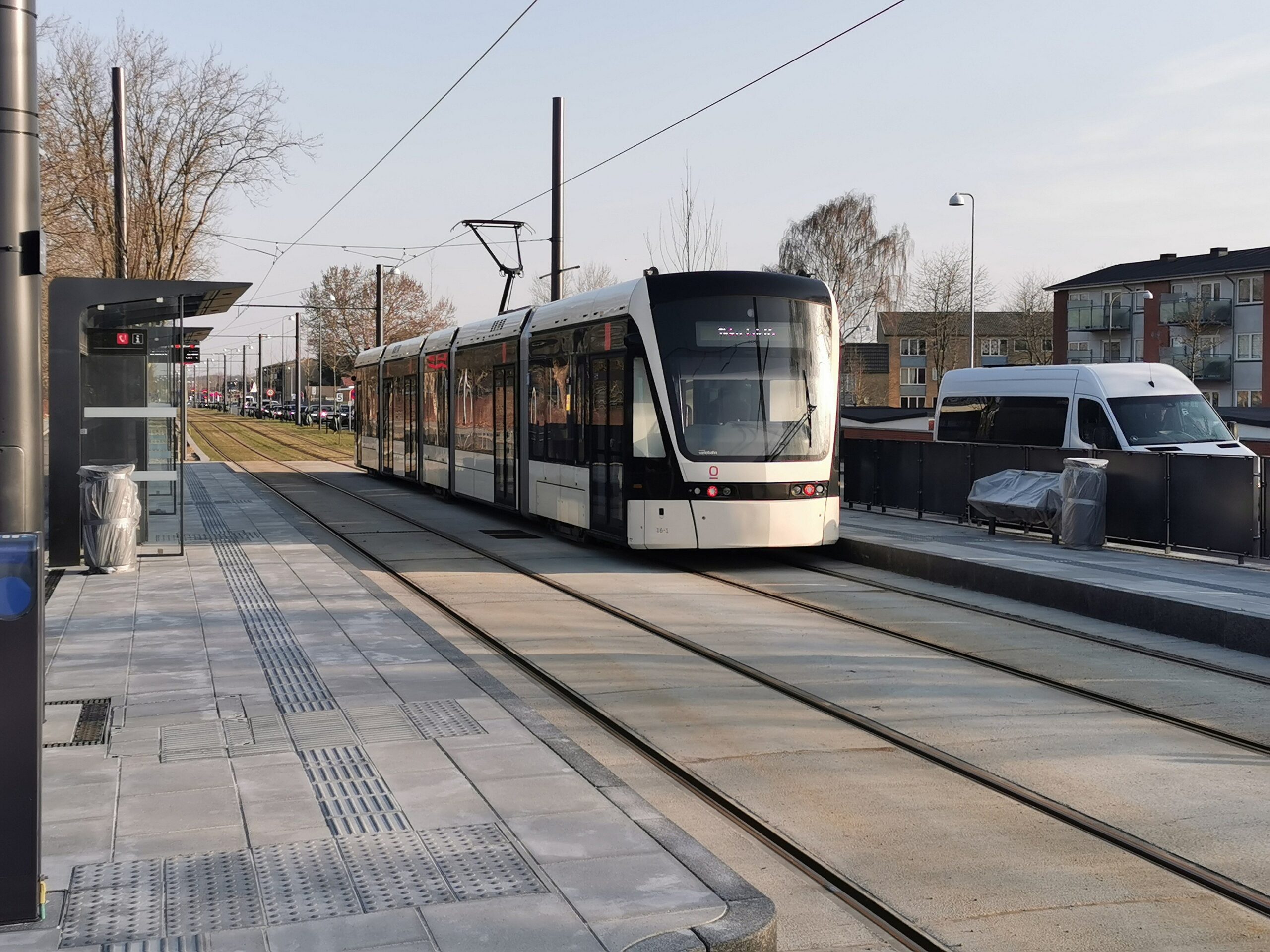
In transport infrastructure projects, the material that people walk on, touch and see every day often goes unnoticed. However, it is one of the elements that has the greatest influence on the user experience and on how the space functions. Metro stations, airport terminals, railway platforms, tramways and transport interchanges require materials capable of withstanding intensive use without compromising performance or visual quality.
In this context, granite ceases to be simply a paving material and becomes an essential part of the infrastructure. Its resistance to wear, dimensional stability and ability to adapt to different technical requirements make it an especially suitable solution for spaces where thousands of people pass through every day.
Granite as a Key Element in Transport Infrastructure
At Granilouro, granite has become a silent protagonist in numerous projects related to mobility. From solid pieces for platform edges to stairs, paving, tactile paving, tram kerbs and anti-slip surfaces, each element is designed to meet specific safety, accessibility and durability requirements.
These solutions must withstand not only the constant flow of passengers, but also the loads associated with maintenance, temperature changes and the cumulative wear of years of service. The technical demands are high, which is why every piece is manufactured with its long-term performance within a complex and heavily used system in mind.
Durability and Precision for High-Traffic Spaces
Granilouro’s experience in this field is reflected in projects developed for metro stations, both in Spain and other countries, as well as airport terminals in France, Morocco and Spain.
In this type of infrastructure, the material’s durability is just as important as its ability to integrate visually into the architectural ensemble. Paving must maintain its performance despite intensive use, while elements such as stairs, platform edges and transition areas must retain their safety and accessibility properties for decades.
Granite provides a particularly effective response to these requirements. Its resistance to wear and its ability to maintain stable finishes and textures help reduce maintenance interventions and ensure a consistent appearance over time, something that is essential in infrastructure operating continuously.
Safety, Orientation and Spatial Legibility
In transport environments, every element serves a purpose that goes beyond purely construction-related considerations. The design of each piece also contributes to user orientation, the perception of safety and an understanding of routes and circulation.
Platform edges, for example, incorporate anti-slip strips and specific geometries that help define risk areas and make the space easier to understand. Likewise, paving and stairs are designed with circulation flows, evacuations and changes of direction in mind, using textures, finishes and colour variations as tools to support mobility.
In this sense, granite acts not only as the physical foundation of the infrastructure, but also as a resource that helps organise and make the travel experience more intuitive.
Coordination Between Manufacturing and Installation
The complexity of transport infrastructure requires precise coordination between design, production and installation. Each piece must match the planned dimensions exactly and fit within construction systems where margins for error are minimal.
Granilouro develops its solutions taking actual site conditions into account, anticipating processes for marking, sorting and preparing pieces in order to optimise the installation phase. This planning helps speed up installation, reduce incidents and ensure that each element is correctly integrated into the infrastructure as a whole.
Workshop precision therefore becomes a key tool for ensuring the final quality of the project and minimising disruption in spaces where construction schedules are often particularly demanding.
A Material Designed to Support Mobility
Granite in transport infrastructure demonstrates that the most effective materials are often those that go unnoticed. It is beneath the feet of millions of people every day, withstanding constant traffic, changing environmental conditions and demanding technical requirements without losing functionality or architectural presence.
In metro stations, airports, tramways and railway infrastructure, Granilouro demonstrates that granite can play a role that is both highly technical and essential. A material capable of combining strength, precision and architectural quality to contribute, discreetly yet decisively, to the functioning of contemporary mobility.
