
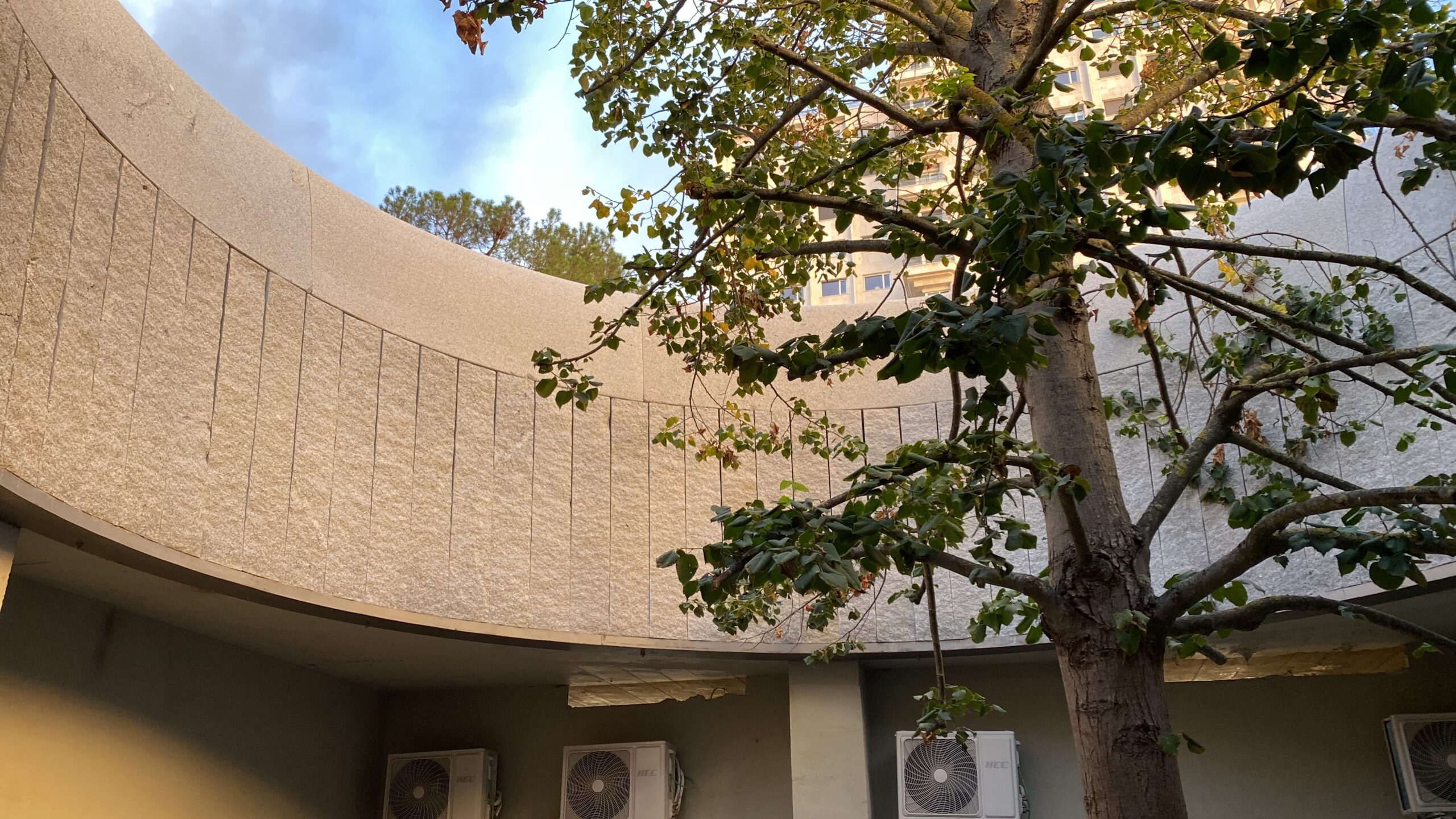
There are materials that merely fulfill a function, and others that also build an atmosphere. Granite belongs to this second category when worked with discernment, because its value lies not only in its strength or durability, but in its ability to transform the perception of a space through its finish, geometry, and installation.
In architectural and public space projects, granite ceases to be a neutral surface the moment decisions are made on how it is cut, treated, and presented. A piece can turn out to be understated or expressive, technical or sculptural, continuous or bold, depending on a series of decisions that seem discrete but completely define the final result. That is where a granite company like Granilouro shows its true value: not so much in the raw material, but in the precision with which it converts it into a specific constructive solution.
The role of finishes in the perception of space
Working with granite requires understanding it from both material and form. It is not enough to choose a beautiful stone; one must know how it will respond in a pavement subjected to intensive use, in an urban bench exposed to the elements, in a large-format step, or in a unique facade piece. Each application demands a different behavior, and each behavior is achieved through a very specific combination of cut, thickness, texture, and surface finish.
In that sense, the difference between a honed, polished, or flamed piece is not only visual. It also changes its tactile reading, its response to light, its integration with other materials, and its ability to age with dignity. A well-worked granite does not seek to draw immediate attention; it seeks to sustain the project with presence, order, and character. That is precisely the virtue of materials that are well-resolved from the architecture.
The importance of technique in special granite pieces
Granilouro works precisely on this less obvious dimension of granite: that of technique applied to detail. Its projects show a very interesting relationship between material, form, and use, with solutions ranging from urban benches to unique paving, solid pieces for representative spaces, and special elements for highly demanding environments. In many of these works, granite does not act as a backdrop but as the structure of the built landscape.
Projects that show the potential of architectural granite
There are particularly revealing examples. In Madrid’s Gran Vía, for instance, granite is integrated into the public space through benches that are not understood as isolated furniture, but as part of a wider urban intervention. In Paseo do Parrote, in A Coruña, the material acquires a more sculptural reading, with pieces that dialogue with the seafront and with the scale of the promenade. In the Royal Collections Gallery, granite participates in a facade solution that demands precision, presence, and impeccable execution. And in Plaza de España, in Madrid, the large-format triangular pieces demonstrate to what extent granite can adapt to complex geometries without losing its impact or elegance.
The interesting thing about these projects is not only their visible result, but the way they reveal a very clear idea: granite, when well-conceived, is not a repetitive material. It can be monumental or discreet, urban or institutional, solid or light in appearance, technical or almost sculptural. It all depends on how it is worked. And that is where the knowledge of a specialized company makes the difference between a correct solution and a truly architectural result.
